Saturday, June 26, 2010

A Whole New Ball Game

The show must go on, so back to the World Cup!

From now on, no more playing 90 minutes of a defensive game. No more holding on for a scoreless draw until fans are bored to tears. Or so we expect!

The knockout stage of the tournament has just begun. It’s all or nothing now: either teams win the match or they go back home. They'd better show what they’ve got now, because it’s a whole new ball game.

If something is a whole new ball game, it is completely different from, or much more difficult than, it was before. Here are more examples:

  • Setting up you own company is the easy part of the process. Staying in business is a whole new ball game.
  • If you’ve only experienced Montreal in the winter, summer is a whole new ball game.
  • Now it’s a whole new ball game because of the world crisis that impacts everybody.
  • When the smoking ban takes effect next year it’ll be a whole ball game for bar goers.
  • Our company has been very successful in Europe, but entering Asia is a whole new ball game. It is going to be very challenging.

That’s it. Let’s hope Brazil does well in this whole new ball game that the World Cup has entgered.

Till next time!

Friday, June 25, 2010

This Is It


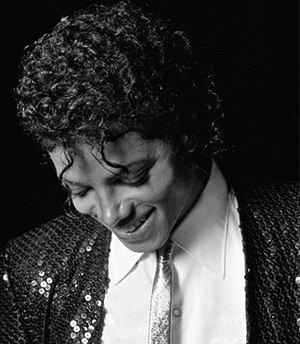
A year ago today the world lost arguably the greatest pop music artist of all time. And this is the way I found to pay a little tribute to Michael Jackson: In Michael Jackson-style I take a short break from the special World Cup series to make way for the king of pop.

Michael Jackson died before he got to present his last tour, aptly titled “This Is It”. During the announcement he made on March 5, 2009 for the concerts that never happened, he stated:


These will be my final show performances in London.
This will be it. This is it. And when I say this is it,
it really means this is it. Because uhm...
I will be performing the songs my fans want to hear.
This is it. I mean, this is really it.
This is the final curtain call.


Michael Jackson was calling it the final moment in his career – the final curtain call. “This is it” he says, in a reference to the name of his upcoming tour.

The expression This is it, as you can tell by now, is used to refer to a crucial or climatic event or action. Here are more examples:

  • (A TV sports commentator talking about the World Cup final on July 11): "This is it, folks! This is the historic day when archrivals Brazil and Argentina are face to face for the first time ever at a World Cup final match!"
  • When the judges told me to get on stage and perform to them I thought, “This is it.”


These are other related meanings of this expression.

1. An important or relevant moment or place has arrived:

  • "This is it. This is my stop. I have to get off the bus."
  • This is it,” the guide said, pointing to a house. “This is exactly where Michael Jackson was born.”
  • A: Wow, this place looks so weird. Are you sure this is it? B: Yes, they said the restaurant does look weird but that the food is great.
  • “Well, I guess this is it,” he said. I hugged him and said, “Goodbye, Al. See you one day.”


2. Used to refer to a perfect or final situation, thing or person:

  • "This is it, man. Take it or leave it!"
  • If there is a right time and a right place to discuss this issue, this is it!
  • When I finished reading her script, I thought, “This is it! This is the script I’ve been looking for!”


This is it for now, folks! See y’all next time!

Thursday, June 24, 2010

Uncalled-for

Never at a World Cup have the coaches attracted so much media attention. And often times for the wrong reasons.

Two cases in point are Brazil’s Dunga and France’s Raymond Domenech, whose arrogance and hostility toward members of the press and fellow managers, respectively, have been met with harsh criticism from fans and the media alike.

Their attitude has been considered by many as uncalled-for.

The adjective uncalled-for is used to refer to behavior or attitude that we believe is inappropriate, offensive or insulting. A rude comment, unfair treatment or an angry attitude that we believe is gratuitous and unnecessary are all examples of behavior that is considered uncalled-for.

Therefore, one can say that Dunga’s swearing under his breath at a post-match press conference was uncalled-for. Domenech’s refusal to shake hands with the World Cup champion coach, Parreira, was equally uncalled-for.

Watch this scene from Two And a Half Men and decide whether Charlie’s attitude at 00:35 is uncalled-for.

That’s it!

Tuesday, June 22, 2010

Underachieving


The country that gave us football, home of one of the most exciting soccer leagues in the world, England arrived at the World Cup ranked among the top 5 favorites to win. The drab and uninspiring performance they have put in so far however leaves little hope that they will even move on to the next stage
After a 1-1 draw with the U.S. and a scoreless draw with Algeria, the English team went from a sure bet to carry off the World Cup trophy to one of the most underachieving teams in the competition so far. It is very unlikely that anyone will ever be able to explain why this should be so.

The adjective underachieving is used to talk about someone, usually a student or athlete, who doesn’t perform as well or work as hard as they can.

The noun form of that adjective is underachievement, which is formed by the combination of the preposition ‘under’ and the noun ‘achievement’. As you may know, the noun ‘achievement’ translates in Portuguese as “realização”, “conquista”, “êxito” or “feito”.

This is to say that the English team has the potential to achieve a better level of performance, but when out on the pitch the players so far have proved to form an underachieving squad.

The verbal form is ‘to underachieve’, and the noun used to refer to the person that underachieves is ‘underachiever’. I can’t think of a single word in Portuguese that translates that idea, so I’ll leave the example sentences below without a version in Portuguese.

verb - to underachieve:

> Socioeconomic differences may help explain why some student groups underachieve in school.

noun - underachievement:

> The underachievement of gifted students is a big mystery.

adjective - underachieving:

> Brazilian singer Jorge Vercílio is considered by many to be an underachieving copy of singer-songwriter Djavan.

noun - underachiever:

> Some people believe that, at that price, the iPhone is an underachiever.


The opposite of the adjective underachieving is  – yes you guessed it right, overachieving. It is used to describe someone or something that does better than expected.

The noun form overachiever is used to refer to a person who performs better than expected, and sometimes feels unhappy if they don’t achieve everything they want. In a way, an overachiever is excessively and unhealthily dedicated to achieving success. To say that someone is an overachiever may imply that they desire more than is needed.

Here are examples using the respective forms of the verb to overachieve:

verb – to overachieve:

> Australia played fairly well and overachieved at the last World Cup. But they have been a disaster so far at this World Cup.

noun – overachievement:

> The fact that North Korea conceded only two goals against Brazil is considered by many as an overachievement.

adjective – overachieving:

> If Brazil wins this World Cup, it’ll have been the least talented and the most overachieving national team.

noun – an overachiever:

> She was an overachiever who would not get married until she found the perfect father for her babies. She died alone.


So England has been quite underachieving at this World Cup. What teams do you believe are the overachievers so far?

Monday, June 21, 2010

The Upper Hand

Sports commentators all over the world are calling Luis Fabiano’s second goal yesterday a beauty – or a “golaço”, in good Brazilian Portuguese.

Yet the cameras never lie: Luis Fabiano handled the ball as he beautifully worked his way through his opponents in the goal area and drove a shot to the back of the net. The Brazilian striker was not ready to admit to his handling the ball either when a smiling and apparently lenient French referee, Stephane Lannoy, approached him about it.

Luis Fabiano’s handling of the ball seemed a little ironic considering the circumstances of the game: picking a French referee to officiate a match involving the French-speaking Ivory Coast clearly gave the Ivoirian players the upper hand in terms of communication.

The upper hand means an advantage or superiority. This is to say that Ivory Coast’s players had a linguistic advantage as they were able to communicate with the referee in their native language. In talking to the referee in French, the Ivoirian players may very well have convinced him that Brazil’s attacker, Kaká, hit his opponent and deserved a red card. Well, let’s hope that the Ivoirian players learn to get less physical and be more skilful instead!

There have been many suggestions as to the origin of the phrasethe upper hand’, but there is no certainty as to where it really originated. We normally talk about 'having the upper hand’ or ‘gaining the upper hand’.

Here are more examples:


  • Our company has the upper hand because of our long experience in this business.

  • Right now I would give the upper hand to Brazil due to their long tradition of World Cup success. As they say in Brazil, “a team’s shirt has weight” (a camisa “pesa”).

We also use the expression ‘the upper hand’ figuratively:


  • The infection was gaining the upper hand [=was becoming worse] and the patient’s condition was deteriorating.

That’s it!

Thursday, June 17, 2010

Shut Up!

So Hawk Bueno, I mean, Gavião Bueno, I mean Galvão Bueno’s now legendary penchant for getting on people’s nerves has made the New York Times. No less. I guess he has the World Cup to thank for his instant worldwide notoriety. Or hardly.

For what it’s worth, however, he doesn’t seem any more willing now to finally give in to pleas to, well, just shut up!

Shut up is probably one of those English verbs that many non-English speakers the world over are familiar with. Maybe because it is an offensive term that people like to have under their belt, or maybe because commands in any foreign language are relatively easier to remember. Whatever the case, here are some more examples using it.

> Can someone get that dog to shut up?
Alguém por favor faz* esse cachorro calar a boca?

> Nothing shuts her up!
Nada faz ela* calar a boca!


These are other common phrases for telling people to shut up (remember, they’re all very offensive!)

> “Shut your piehole. You’re talking too much!” (piehole is a slang term meaning ‘mouth’)

> “Can’t you just shut your mouth?”

> “Just shut your face and sit down.”


Additionally, shut up is used as an expression of incredulity, similar to “I can’t believe it!”, “Really?”, “No way!”. This is very informal in tone, and typically used by young people. For example:

A: I just ran into Madonna in the elevator!
B: Shut up!

Or imagine someone tells you that, according to research, the number 1 vegetable consumed by young kids in the U.S. is -- peas, corn, carrots, broccoli? No... French fries! Not good, right? Check what the woman at 31 seconds of this TV commercial says.


By extension, shut up is also used to express satisfaction, pleasure, approval, awe, or reverence. This is also very popular among young people.

For instance: You’re crazy about pastel and caldo de cana, but having lived in Alaska for the last 10 years you haven’t seen any of that for ages and therefore miss it sorely. One day you walk into your regular deli and find out that they’re now selling pastel and caldo de cana! In disbelief, you shout:

Shut up!


That's it for now! Till next time!


*Note: I deliberately chose the constructions "Alguém faz esse cachorro calar a boca" and "Nada faz ela calar a boca" over "Alguém faça esse cachorro calar a boca" and "Nada a faz calar a boca", respectively.

Wednesday, June 16, 2010

Lame

So, the big day arrived. Football fans all over the world tuned in to follow Brazil’s opener at the World Cup against a weak North Korea, expecting to watch yet another display of the “jogo bonito” by the five-time champions. Brazil came out victorious. That is cause for celebration, right? Well, hardly!

Brazil did bring home their first 3 points of the group stage, and that would be considered mission accomplished for many teams in the world – but not for Brazil. For the green-and-yellow fans, winning alone is not enough. Heck, winning is likely the least important of reasons why Brazilians follow their team on TV! They expect nothing less than magic and enchantment from the national team – the “jogo bonito”, remember?

What they witnessed yesterday, however, was a far cry from a beautiful performance. To be sure, Brazilians were happy that the “seleção” won the game – but it was a lame victory, they say.

Here’s an interesting word – lame.

The adjective lame is used to mean ‘”coxo”; “manco”, “aleijado” in English. It is considered an offensive word to use when talking about a person. Lame eventually came to mean weak, unconvincing, not smart or impressive. As in a lame victory ("vitória mixuruca") above. Here are more examples:

> What a lame excuse!
Que desculpa esfarrapada!

> She didn’t accept the lame apology he offered for cheating on her.
Ela não aceitou o pedido de desculpa fajuto que ele fez por ter traído ela*.

> What a lame joke you made!
Que piada mais sem graça a sua!

>She’s nice but her boyfriend is really lame.
Ela é legal, mas o namorado dela* não está com nada / é péssimo

Now let’s hope that Brazil finally plays the beautiful game against the strong Ivory Coast on Sunday!

*Even in written Portuguese, I prefer the constructions "ter traído ela" and "o namorado dela" to "tê-la traído" and "seu namorado", respectively.